



Świnoujście Tunnel


Świnoujście Tunnel
Świnoujście Tunnel
TBM helps the local residents realize the century-long traveling dream in Poland
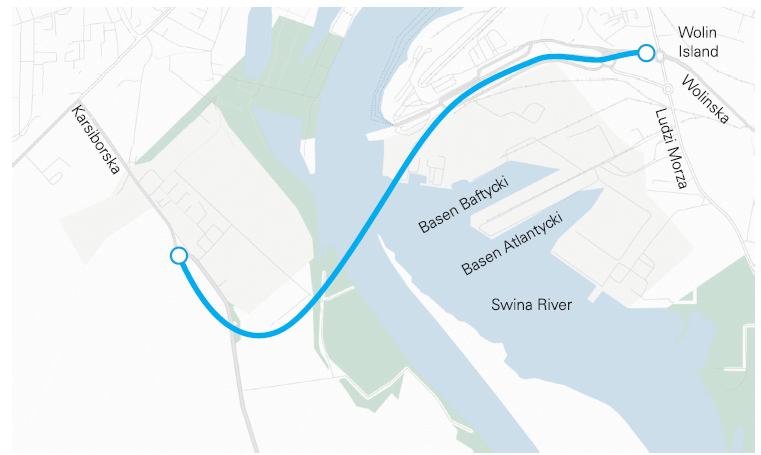
The tunnel under the Swinariver, with a length of 1,440m and a minimum curve radius of 300m. CREG has supplied a 13.46m slurry TBM designed with anoptimized cutterhead structure, continuous cutter wear detection, environmentally friendly pipe extension system and special articulation system for ease of steering. The TBM completed the breakthrough of the swine Tunnel on the 17th of September 2021.
Project Background
The tunnel is located between Uznam and Wolin of Świnoujście in the northwest coast of Poland. It is the longest underwater highway tunnel in Poland. Local people have commuted by ferry, which takes 40 minutes, for a hundred years, although the two small islands are only 1 kilometer apart. With the completion of the tunnel, the cross-river commuting time is shortened to 4 minutes, bringing great convenience to the daily life and travel of local residents and promoting the economic development on both sides of the Swina River, which has a profound impact and great significance. On the occasion of the completion of the tunnel, the president of the Republic of Poland, Andrzej Duda, came to the site and boarded the TBM to watch the tunneling and building of the last ring of segments. He pointed out: "The completion of this tunnel is of epoch-making significance (for Poland)."
right side
Świnoujście Tunnel Route
The large diameter TBM has overcome the challenge of 300 m radius curve

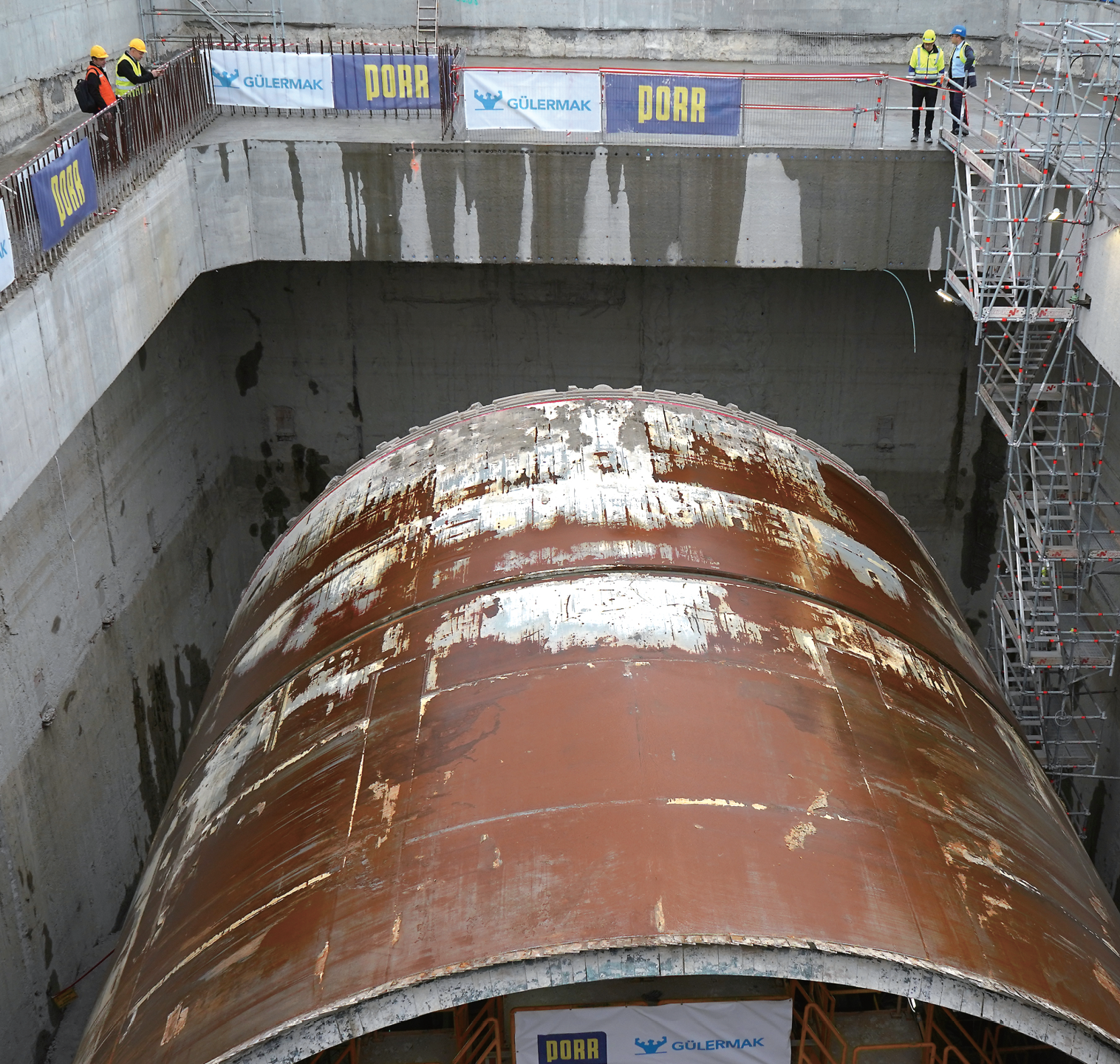
The cutterhead is being lowered down to the launching shaft
Project Information
| Tunnelling length: | 1,483 m |
| Geology: | Fine-medium sand with gravel,sandy clay with gravel and chalk |
| Contractor: | Porr-Gulermak JV |
TBM Parameter
| TBM type: | SPB TBM |
| TBM S/N: | CREC 797 |
| Boring Dia: | 13.46 m |
| Main drive power: | 4,200 kW |
| FAT date: | June, 2022 |
| Best performance: | 338 m per month, 18 m per day |
Project Characteristics
| Traversing marine fine sand, silty clay, and gravel-bearing silty clay, with poor self-stability |
| Large overburden, high groundwater level, and large water and soil pressure |
| Minimum turning radius of 300 meters |